East direction Vastu Tips
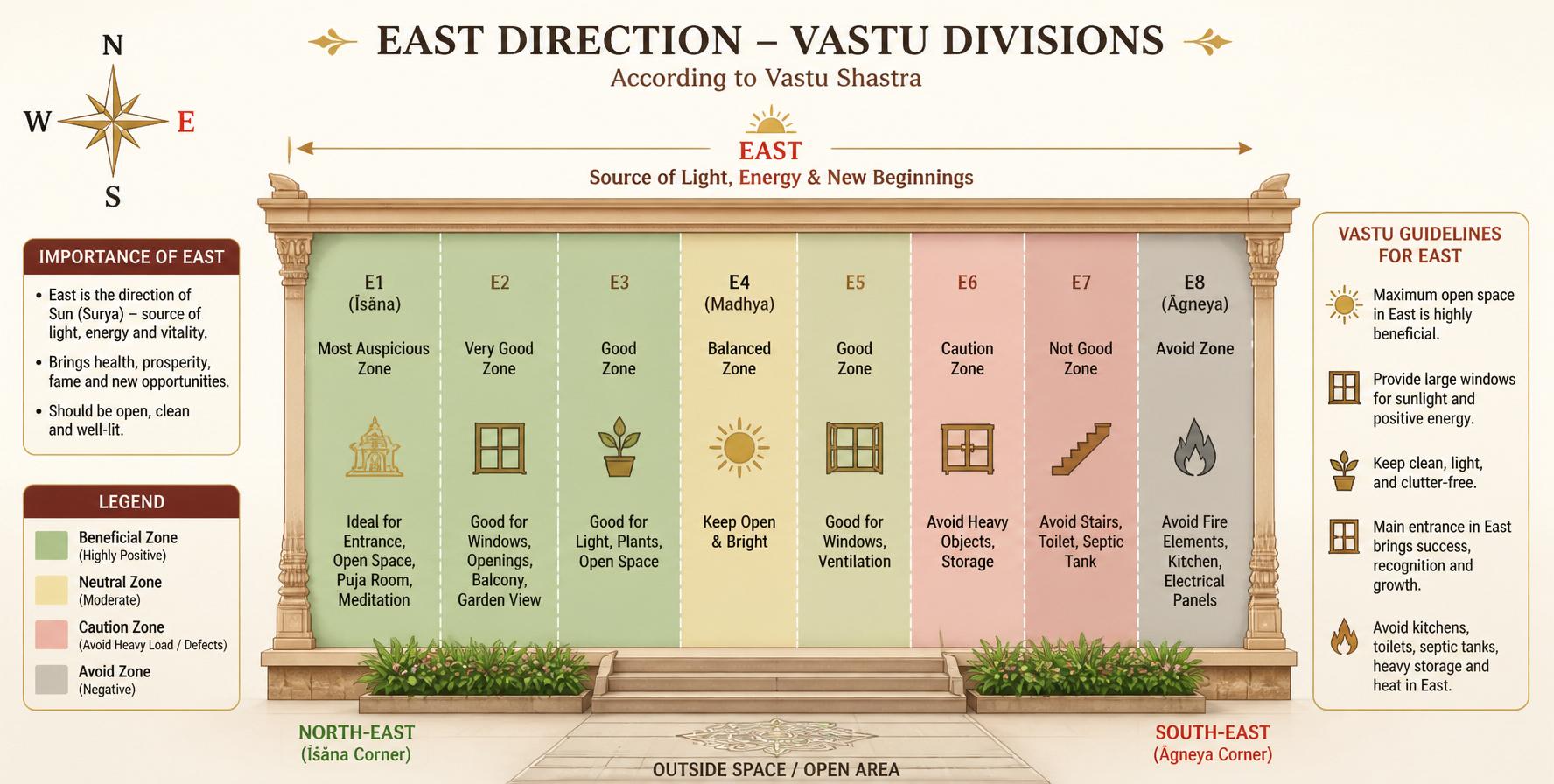
The East Direction in Vastu Shastra: Understanding the Eight Divisions for Health, Prosperity, and Success
The East direction holds a place of great significance in Vastu Shastra, the ancient Indian science of architecture. It is the direction of the rising Sun (Surya), symbolizing new beginnings, vitality, knowledge, health, and positive energy. A well-planned East side of a home or commercial building allows natural sunlight to enter, creating an environment filled with optimism and prosperity.
However, according to traditional Vastu principles, the East direction is not uniformly beneficial. It is divided into eight equal zones (E1 to E8), each carrying a unique energy and influencing different aspects of life.
Why the East Direction is Important
The East is associated with:
Health and physical well-being
Growth and prosperity
Reputation and social recognition
New opportunities and career success
Mental clarity and spiritual development
Keeping the East open, clean, and well-lit helps invite positive cosmic energy into the building.
Understanding the Eight East Divisions
E1 – Ishana (Most Auspicious Zone)
This is the most sacred part of the East.
Best suited for:
Main entrance
Open space
Meditation area
Prayer room (Puja Room)
This zone promotes peace, spiritual growth, wisdom, and prosperity.
E2 – Very Good Zone
An excellent location for:
Windows
Balconies
Garden views
Natural ventilation
This area enhances positive energy and improves the flow of sunlight.
E3 – Good Zone
Ideal for:
Indoor plants
Open spaces
Light decorative elements
This zone supports growth, freshness, and positive vibrations.
E4 – Madhya (Balanced Zone)
The central East should remain:
Bright
Open
Free from heavy obstructions
Maintaining openness here ensures a balanced flow of solar energy.
E5 – Good Zone
Suitable for:
Windows
Ventilation
Natural lighting
This zone supports healthy air circulation and maintains harmony inside the home.
E6 – Caution Zone
Avoid:
Heavy storage
Large cupboards
Massive furniture
Heavy weight in this zone may obstruct the beneficial energy entering from the East.
E7 – Not Recommended Zone
Avoid constructing:
Staircases
Toilets
Septic tanks
These structures may negatively affect health, progress, and financial stability.
E8 – Avoid Zone (Agneya Side)
This sensitive zone should not contain:
Kitchen (if positioned incorrectly within this segment)
Electrical panels
Fire-related equipment
Heavy heat-generating installations
Improper use of this zone may disturb the energy balance and create unnecessary challenges.
General Vastu Guidelines for the East
To maximize the benefits of the East direction:
Keep maximum open space on the eastern side.
Install large windows to welcome morning sunlight.
Maintain cleanliness and avoid clutter.
Prefer the main entrance in an auspicious eastern zone.
Avoid heavy storage, excessive heat, and unnecessary obstructions.
Allow fresh air and natural light to enter daily.
Benefits of a Proper East Direction
When the East is planned according to Vastu principles, it is believed to support:
Better physical and mental health
Career growth and recognition
Financial opportunities
Improved relationships
Peaceful living
Increased positivity throughout the home
Conclusion
The East direction is often called the gateway of life energy because it receives the first rays of the rising Sun. While every home has unique requirements, understanding the eight divisions of the East can help create spaces that are brighter, healthier, and more harmonious.
Vastu should be viewed as a holistic design philosophy that emphasizes natural light, ventilation, balance, and mindful planning. Whether you are constructing a new home or renovating an existing one, giving thoughtful attention to the East direction can contribute to a more comfortable and uplifting living environment.
— Acharya Shakti
Spiritual Researcher & Founder
Acharya Shakti Spiritual and Cultural Education Institute